Wednesday, June 24, 2015

Cats on Heart Meds Need Potassium and Iron Supplements

If you read the other Facebook page "Cats with HCM" you'll be more up to date than this page.  Since Cooper died August, 2014, there isn't much to post although I post from time to time information that might be useful.

For example, our HCM cat Myrna at "Cats with HCM" has been on iron supplements since April to improve kidney function because her diuretic needs to be increased due to congestion and her BUN and creatinine were creeping up.  Her kidney function has improved dramatically as shown in the kidney values so I highly recommend that you give your cat iron if it is on high levels of diuretic and/or the BUN and creatinine are creeping up.  We give Nature Made and use the 65mg tabs and give three 1/2 tabs a day.  Start with one 1/2 tab and increase to two 1/2 tabs and up to three a day if needed. It may lead to dark stool which is normal or diarrhea.  If the diarrhea isn't severe (more than once or twice a day) and doesn't prevent the cat from feeling well, then continue the iron.  But if you are concerned, cut back to one or two 1/2 tabs.   Why? Because iron makes red blood cells which the kidneys need to better process the diuretic to help the med get rid of congestion.  The body needs it to make oxygen which keeps the cat breathing well, keeps up the blood pressure (to normal levels), which keeps muscles strong and nerves in the body (heart, kidney, etc.) functioning better.  Even if the cat has "normal" iron blood levels, this is essential and we have seen great success with Myrna.


Don't forget to give a potassium supplement if the cat's on a diuretic even if the potassium blood level is "normal".  If it's below 5 on the blood test, give it. We use Sundown 595mg and break them in half.  How much depends on how low is the potassium.  Myrna from the other page, began with two tabs a day but is now taking 3000mg of potassium a day (per the label not the actual amount.)

Wednesday, February 11, 2015

Feline Moderator Band Cardiomyopathy Use of Rutin and Torsemide and the Need for Increased Potassium

If your cat has Moderator Bands, and/or pleural effusion-which requires constant needle aspiration to withdraw fluid from around the lungs, there are two things you should try: switch from lasix to torsemide. It's stronger, works faster on pleural effusion than lasix and theoretically requires less mg per volume than lasix. Extra potassium is needed as torsemide can deplete potassium and other electrolytes. Potassium is necessary for kidney function. Use Gerber baby food sweet potato (highest food source for potassium) and Tumil-K and Sundown Potassium (or another regular source but we use and like this product.) The other thing is rutin. Ask your vet if white fluid comes out when fluid is withdrawn from around the lungs with the needle. This is lymphatic fluid and can cause scar tissue or fibrosis to form in the lungs, creating pockets for fluid to sit (and impossible to withdraw) and the fibrosis makes breathing painful and difficult. We are using rutin from Whole Foods. We give 750mg daily-divided up over four times a day. We have used this for a month and so far, scar tissue hasn't formed.

Sunday, February 1, 2015

The Necropsy on Cooper's Feline Moderator Band Cardiomyopathy Heart

We received the necropsy in September of Cooper's (who died August 2014) kidneys and heart we donated for research to MSU.

From the notes:

"...within the left ventricle of the heart there are excessive amounts of loose fibrous connective tissue lined by endothelium that span the interventricular septum to the left ventricular free wall and papillary muscles.  Subgrossly, sections of kidney have mild undulation of the capsular surface, with mild interstitial fibrosis of the subjacent cortical parenchyma.  Glomeruli have mild diffuse membranous glomerulonephropathy and there is multifocal thickening of basement membranes of Bowman's capsule, proximal convoluted tubules, and vessels. Proximal tubular epithelial cells are swollen with finely vacuolated cytoplasm and occasionally faded nuclei. There are mild, multifocal lymphoplasmacytic interstitial infiltrates.  Gross examination of the heart finds excessive number of small, fine moderator bands towards the apex of the heart, extending from papillary muscles to the interventricular septum. There is an increased amount of white fibrous connective tissue along the endocardial surface of the left ventricle. Excessive moderator bands are considered under the heading of cardiomyopathies although it is considered a congenital defect that manifests later in life.  In this case, these moderator bands are visible grossly and histologically within the distal apex of the left ventricle.  The kidney lesions  suggest a mild nephritis of some chronicity, and these changes, in conjunction with reduced cardiac output and therapies to enhance diuresis in the animal, likely contributed to the reported azotemia prior to death."


Definitions: I tried to find definitions and explanations for what the notes mean.  These are not the best but this is what the above refers to.  Basically, damage was done to the kidneys, preventing them from processing the diuretic properly. The diuresis process could not keep congestion from the lungs.  In addition, of course, were the complications of the heart disease.  We believe he needed more potassium and supplements for kidney support while in the ER and every day.  There had been a slight improvement in his kidney values prior to his death but we only had had a month when we were giving extra supplements.  Given more time, I think we could have helped his kidneys improve their function and the diuresis process.  We see it working currently for Myrna, who, despite now on Torsemide, has normal kidney values (see  blog "Cat Living with Hypertrophic Cardiomyopathy", January 2015 posts):

Left ventricle-The left ventricle is one of four chambers of the heart. It is located in the bottom left portion of the heart below the left atrium, separated by the mitral valve. The thickest of all the chambers, the left ventricle pumps oxygenated blood to tissues all over the body. After flowing into the left atrium and through the mitral valve, blood enters the left ventricle before it is pumped out through the aortic valve into the aortic arch and onward to the rest of the body.

fibrous connective tissue- bands of tissue in the heart that normally serve a purpose

endothelium-thin layer of simple squamous cells that lines the interior surface of blood vessels and lymphatic vessels forming an interface between circulating blood or lymph in the lumen and the rest of the vessel wall.

interventricular septum-is the stout wall separating the lower chambers (the ventricles) of the heart from one another.

left ventricular free wall-The left ventricle free wall is composed of the area of the left ventricular wall not in contact with the interventricular septum and is not part of the apex.

papillary muscles-muscles located in the ventricles of the heart. They attach to the cusps of the atrioventricular valves (a.k.a. the mitral and tricuspid valves) via the chordae tendineae and contract to prevent inversion or prolapse of these valves on systole (or ventricular contraction).

undulation-marks that appear on the surface of the kidneys that appear to be up and down

capsular surface-thin membranous sheath that covers the outer surface of each kidney. The capsule is composed of tough fibres, chiefly collagen and elastin (fibrous proteins), that help to support the kidney mass and protect the vital tissue from injury.

interstitial fibrosis- characterized by the destruction of renal tubules and interstitial capillaries as well as by the accumulation of extracellular matrix proteins. The severity of tubulointerstitial fibrosis has long been considered as a crucial determinant of progressive renal injury in both human and experimental glomerulonephritis.

subjacent cortical parenchyma-The parenchyma are the functional parts of an organ in the body. This is in contrast to the stroma, which refers to the structural tissue of organs, namely, the connective tissues.

glomeruli- A tuft of capillaries situated within a Bowman's capsule at the end of a renal tubule in the vertebrate kidney that filters wasteproducts from the blood and thus initiates urine formation.

glomerulonephropathy-any noninflammatory disease of the renal glomeruli.

Bowman's capsule-a cup-like sac at the beginning of the tubular component of a nephron in the mammalian kidney that performs the first step in the filtration of blood to form urine.

proximal convoluted tubules and vessels-is the portion of the duct system of the nephron of the kidney which leads from Bowman's capsule to the loop of Henle.

Proximal tubular epithelial cells-Epithelium is one of the four basic types of animal tissue

vacuolated cytoplasm-A membrane bound organelle in the cytoplasm of most cells, especially plant cells, containing water and dissolved substances suchas salts, sugars, enzymes, and amino acids.

faded nuclei-nucleus or nuculeus, meaning kernel) is a membrane-enclosedorganelle found in eukaryotic cells. It contains most of the cell's genetic material, organized as multiple long linearDNA molecules in complex with a large variety of proteins, such as histones, to form chromosomes. The genes within these chromosomes are the cell's nuclear genome. The function of the nucleus is to maintain the integrity of these genes and to control the activities of the cell by regulating gene expression—the nucleus is, therefore, the control center of the cell. 

lymphoplasmacytic interstitial infiltrates-of, relating to, or consisting of lymphocytes and plasma cells.  Interstitial Infiltrates occur within the connective tissue surrounding the air spaces.


papillary muscles- muscles located in the ventricles of the heart. They attach to the cusps of the atrioventricular valves (a.k.a. the mitral and tricuspid valves) via the chordae tendineae and contract to prevent inversion or prolapse of these valves on systole (or ventricular contraction).

interventricular septum-stout wall separating the lower chambers (the ventricles) of the heart from one another.

endocardial surface of the left ventricle-endocardium is the innermost layer of tissue that lines the chambers of the heart. Its cells are embryologically and biologicallysimilar to the endothelial cells that line blood vessels. The endocardium also provides protection to the valves and heart chamber

Monday, September 1, 2014

Wikipedia-Start Here to Learn More About Kidney Function

http://en.wikipedia.org/wiki/Kidney

Supplements to Use to Improve Kidney Function

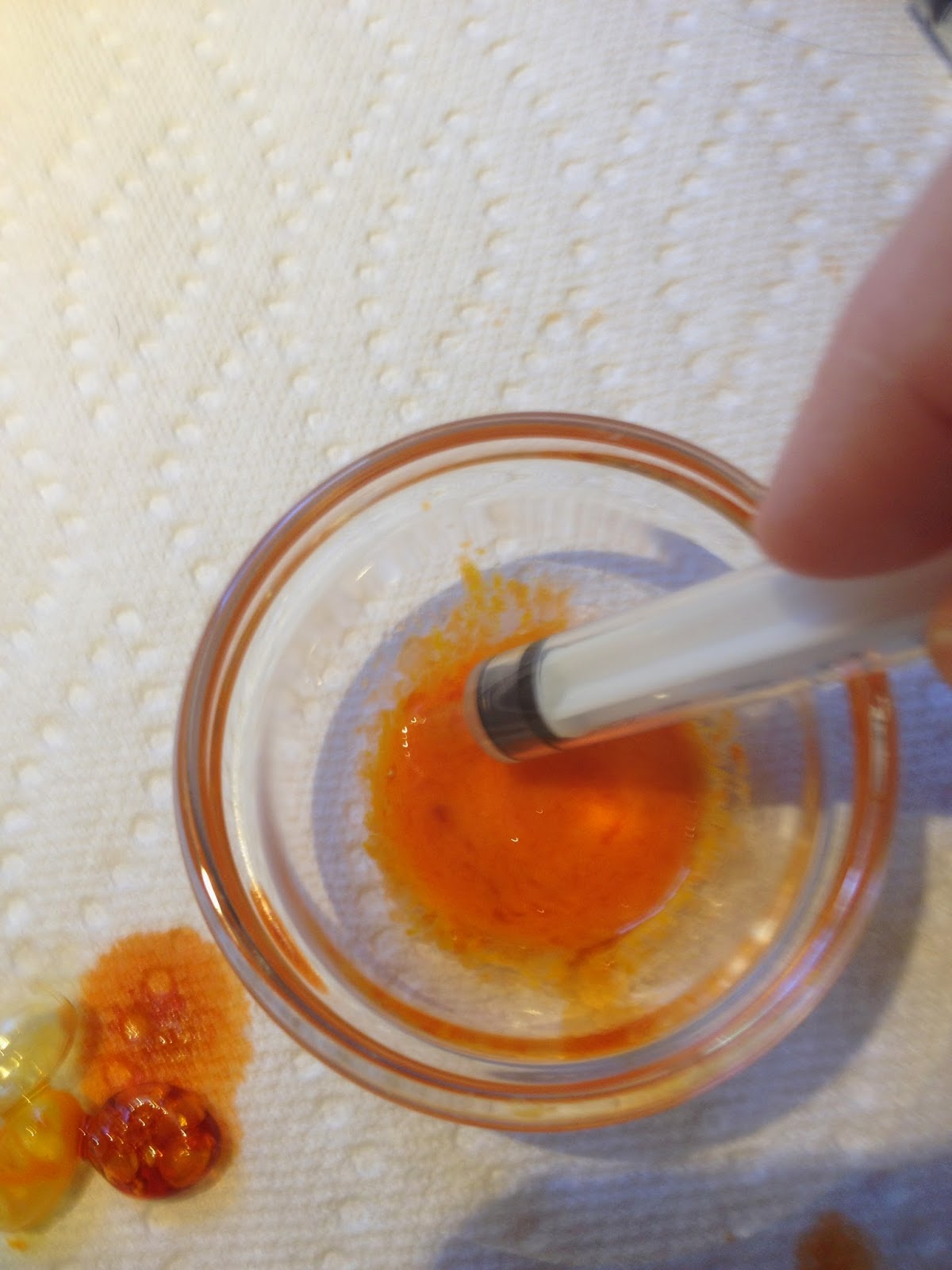
We mix krill oil, COQ10, vitamin E oil, and vitamin C powder, and about 1/2 ml of water, and some Gerber Baby's First Foods Sweet Potato into a small bowl.  I syringe it into a 3ml syringe and give it by mouth to Myrna (and was to Cooper.) It did help to improve Cooper's kidney values somewhat. We will see in September if they are improving Myrna's values or not.


 We give almost 1 ml of apple cider vinegar by mouth to combat stomach acid and to help the kidneys by preventing metabolicacidosis. I mix one part vinegar and one part water or more water as needed so that the cat can tolerate it.
 I ordered this from Amazon.
 I ordered this from Amazon.
 Nature Made and Sundown supplements seem to work well for Myrna. I give her 1/2 iron three times a week.  The Sundown Potassium is inexpensive but works well. I give 1/3 of a pill to her four times a day.
 I give 1/2 a B12 twice a week.  I give 1/4 of a magnesium three times a week.

Feline Heart Patients-Heart Size Might Matter and Potassium Support in the ER May Be Key

Coopers heart left atrial went from 1.9 in May to 2.3 with Friday's echo. That's a large jump in a short time. In comparison, in March, Myrna's left atrial was 2.2. I do not have any notes on what it was in June although I do know the cardio said it was stable. She sees the cardio again in September and we'll see how things are then.

Coopers potassium level in July was 3.6-low but decent. It was about the same Friday but tanked hours later in the ER to 2.4. Perhaps a lack of potassium support in the ER (doesn't seem to be noted in chart records which I obtained unless I missed it) and not having had his daily doses of potassium pills and sweet potatoes since Thursday is the key to why the kidneys could not function well enough to get rid of congestion on Saturday. Yet he was still urinating large amounts in the ER. But something was causing the fluid to not leave his lungs. Low blood pressure-which is why he was on dopbutamine-is also a clue. I'm not sure I can solve the puzzle. Vets assume the kidneys hit a tolerance to diuretics and can do no more. But potassium support in the ER seems necessary if potassium declines.

Support Kidney Function When on Heart Meds

There is much that needs to be done to support kidney function for cats with either CKD or those on heart meds. Why wait until kidney values begin to decline? We didn't act until Cooper's values were too high. Myrna's (our HCM cat) values were high normal. So, we began giving her the same supplements. We won't know until she sees the cardio for a checkup in September if her values have improved. But Cooper's had in just a month, just not enough or other things were wrong with the kidney process.

We have always been told to support potassium levels. We gave them both Sundown potassium-a third or a half of a tab twice a day for Cooper, four chunks a day for Myrna; Cooper had Tumil K twice a day (and now she will finish the pills.) By giving the following oils, we are giving omegas and antioxidants and whatever else comes from the mix of these oils: a gel cap of Krill oil 300mg (this replaces the usually recommended cod liver oil which is no longer pure and cod is almost extinct from over fishing), COQ10 100mg, and 1/2 of 100IU vitamin E, mixed with 1ml of water. I give this orally via a syringe because neither was eating all of their food if the oil was mixed in. I put a smidge of Halo xtra C vitamin C powder (made for cats) in their food. They take 1/2 of a B12 (for energy), 1/4 magnesium (needed electrolyte and muscle/nerve help), 1/4 iron (helps to make blood cells for kidneys)-every other day (it had been every day but I was worried about hypervitaminosis but perhaps more doses could be given.) If the phosphorous level begins to creep up and is above a 4, give a phos binder. Cooper was on a phosphorous binder which binds with iron and causes constipation so I had just decreased his iron to a weekly amount.

In addition, we need to decrease protein intake a tad if kidney values are creeping up and decrease it a lot if kidney values are high. Protein in food should be 6-9% for cats needing to lower protein. Watch those treats-they have about 30% protein. With Myrna, we mix lower protein foods with her regular food and I am breaking up treats when she gets them. She gets a lot due to her litter box encouragement process. (She needs us to take her to the box, encourage her to go, and treat and praise her, and when she goes, treat and praise her again. Helps her go in the box and not have accidents.)

Some Science Diet canned cat food sold at the pet store has 6-9%. It was hard to find an over the counter, low phos cat food because the stores did not carry all of the types flavors in a brand that are produced. Fancy Feast makes pouches of broth with fish. If you buy the "Classic", it is broth. There is another version with milk which I would not use. The broth had very low protein due to it being mostly water. But when poured over his food, this broth enticed Cooper to eat. Tuna fish in a can is low in phos but may not be the best thing to give due to pollution and such. But sometimes, that was all he would eat. Or if we put some on top of his food, he would eat everything.

And finally, water. To support kidneys, the cat must take in water. If your cat gets sick and stops taking in enough water, the cat will become dehydrated and kidney function can be impaired. If the cat stops drinking enough, you can gently give liquids in a syringe or eye dropper by mouth, about 6-9mls every couple of hours.